The store will not work correctly when cookies are disabled.
Raamatukoi kasutab küpsiseid, et tagada e-poe toimimine, pakkuda paremat kasutajamugavust, mõõta e-poe külastatavust ning kuvada teile personaalseid pakkumisi ja reklaame. Klõpsates 'Nõustun', annate oma nõusoleku vajalike ja valikuliste küpsiste kasutamiseks.
… we decree by the authority entrusted to us that the land called Semgallia shall be joined to the diocese of Riga, so that the Bishop of Riga shall possess Semgallia entirely, with all spiritual and temporal jurisdiction and rights, except one third of the same land, which the brothers of the Teutonic House of Saint Mary currently possess, with tithes and full temporal jurisdiction, and which they have beld up to now. Henceforth, no separate bishop shall be appointed in Semgallia, because that region forms a part of the diocese of Riga, for it is not so vast that it could sustain a separate bishopric even if the whole were converted to the faith…
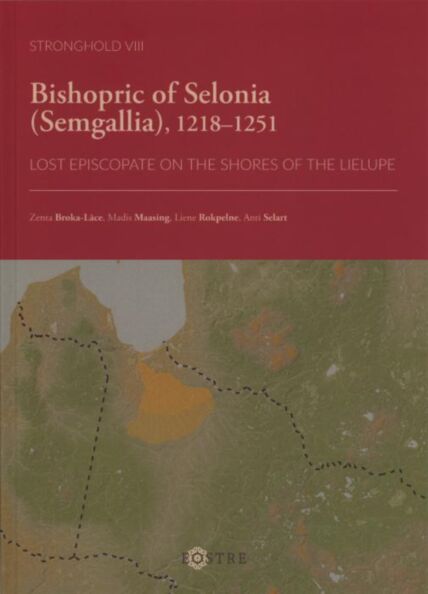
With this decision, the diocese of Selonia (Semgallia) was liquidated in 1251 by Cardinal Legate Guglielmo, Cardinal Bishop Pietro da Collemezzo and Cardinal Priest John of Toledo. The diocese had only been established 33 years earlier, with great hopes of winning the southern shore of the Daugava for the Crusaders.
However, after the establishment of the diocese, Selonia was no longer the focus of the Crusaders' attention: instead, Mežotne, located in the basin of the Lielupe, became the center of Selonia, though the territory was now more commonly referred to as Semgallia. A cathedral was planned to be built at Mežotne and it was also the seat of the cathedral chapter. By all accounts, it could be assumed that the bishops of Semgallia would become important ecclesiastical princes of Livonia, rulers of a secular and spiritual territory.
In this title we investigate why this did not happen and how this diocese was soon liquidated. We will also examine the two known castles of the bishops of Selonia or Semgallia, Babite and Mežotne.
… we decree by the authority entrusted to us that the land called Semgallia shall be joined to the diocese of Riga, so that the Bishop of Riga shall possess Semgallia entirely, with all spiritual and temporal jurisdiction and rights, except one third of the same land, which the brothers of the Teutonic House of Saint Mary currently possess, with tithes and full temporal jurisdiction, and which they have beld up to now. Henceforth, no separate bishop shall be appointed in Semgallia, because that region forms a part of the diocese of Riga, for it is not so vast that it could sustain a separate bishopric even if the whole were converted to the faith…
With this decision, the diocese of Selonia (Semgallia) was liquidated in 1251 by Cardinal Legate Guglielmo, Cardinal Bishop Pietro da Collemezzo and Cardinal Priest John of Toledo. The diocese had only been established 33 years earlier, with great hopes of winning the southern shore of the Daugava for the Crusaders.
However, after the establishment of the diocese, Selonia was no longer the focus of the Crusaders' attention: instead, Mežotne, located in the basin of the Lielupe, became the center of Selonia, though the territory was now more commonly referred to as Semgallia. A cathedral was planned to be built at Mežotne and it was also the seat of the cathedral chapter. By all accounts, it could be assumed that the bishops of Semgallia would become important ecclesiastical princes of Livonia, rulers of a secular and spiritual territory.
In this title we investigate why this did not happen and how this diocese was soon liquidated. We will also examine the two known castles of the bishops of Selonia or Semgallia, Babite and Mežotne.
Uued raamatud - suur osa on laos olemas (seisukord>uus), aga suur osa on ka tellimisel (seisukord > uus tellimisel). Tellimisel raamatud saabuvad lattu enamasti 1-2-3 päeva jooksul.
Kasutatud raamatud (seisukord > väga hea, hea, rahuldav) on kõik kohe laos või poes olemas.
Mis siis teha, kui minu otsitud raamat on läbi müüdud?
Leia otsitav raamat täppisotsinguga siit. Saada oma soov info@raamatukoi.ee. Me salvestame selle ja anname teada, kui raamatu leiame. Vahel leiame kiiresti, vahel kulub aastaid. On raamatuid, mille järjekorras on mitu inimest.
Kuidas raamatud kätte saab?
Saadame raamatuid kõigisse pakikappidesse ja kulleriga otse tellija aadressile. Raamatuile saab ka ise kauplustesse järele tulla: Harju tn 1 Tallinnas või Lossi tn 28 Viljandis. Soome, Lätti ja Leetu saadame raamatuid nii pakikappidesse kui tavapostiga, mujale maailmas samuti tavapostiga. Loe lähemalt siit.
Millises seisukorras on kasutatud raamatud?
Iga kasutatud raamatu eksemplari juures on märgitud seisukord: väga hea, hea, rahuldav, halb ja vajadust mööda ka täpsustus. Loe lähemalt siit.
product
https://raamatukoi.ee/bishopric-of-selonia-semgallia-1218-1251739735Bishopric of Selonia (Semgallia), 1218–1251https://raamatukoi.ee/media/catalog/product/b/i/bishopric-of-selonia-semgallia-1218-1251.jpg2020EURInStock/ajalugu/maailma ajalugu18127<cite>… we decree by the authority entrusted to us that the land called Semgallia shall be joined to the diocese of Riga, so that the Bishop of Riga shall possess Semgallia entirely, with all spiritual and temporal jurisdiction and rights, except one third of the same land, which the brothers of the Teutonic House of Saint Mary currently possess, with tithes and full temporal jurisdiction, and which they have beld up to now. Henceforth, no separate bishop shall be appointed in Semgallia, because that region forms a part of the diocese of Riga, for it is not so vast that it could sustain a separate bishopric even if the whole were converted to the faith…</cite> <br /> <br />With this decision, the diocese of Selonia (Semgallia) was liquidated in 1251 by Cardinal Legate Guglielmo, Cardinal Bishop Pietro da Collemezzo and Cardinal Priest John of Toledo. The diocese had only been established 33 years earlier, with great hopes of winning the southern shore of the Daugava for the Crusaders. <br /> <br />However, after the establishment of the diocese, Selonia was no longer the focus of the Crusaders' attention: instead, Mežotne, located in the basin of the Lielupe, became the center of Selonia, though the territory was now more commonly referred to as Semgallia. A cathedral was planned to be built at Mežotne and it was also the seat of the cathedral chapter. By all accounts, it could be assumed that the bishops of Semgallia would become important ecclesiastical princes of Livonia, rulers of a secular and spiritual territory. <br /> <br />In this title we investigate why this did not happen and how this diocese was soon liquidated. We will also examine the two known castles of the bishops of Selonia or Semgallia, Babite and Mežotne. <cite>… we decree by the authority entrusted to us that the land called Semgallia shall be joined to the diocese of Riga, so that the Bishop of Riga shall possess Semgallia entirely, with all spiritual and temporal jurisdiction and rights, except one third of the same land, which the brothers of the Teutonic House of Saint Mary currently possess, with tithes and full temporal jurisdiction, and which they have beld up to now. Henceforth, no separate bishop shall be appointed in Semgallia, because that region forms a part of the diocese of Riga, for it is not so vast that it could sustain a separate bishopric even if the whole were converted to the faith…</cite> <br /> <br />With this decision, the diocese of Selonia (Semgallia) was liquidated in 1251 by Cardinal Legate Guglielmo, Cardinal Bishop Pietro da Collemezzo and Cardinal Priest John of Toledo. The diocese had only been established 33 years earlier, with great hopes of winning the southern shore of the Daugava for the Crusaders. <br /> <br />However, after the establishment of the diocese, Selonia was no longer the focus of the Crusaders' attention: instead, Mežotne, located in the basin of the Lielupe, became the center of Selonia, though the territory was now more commonly referred to as Semgallia. A cathedral was planned to be built at Mežotne and it was also the seat of the cathedral chapter. By all accounts, it could be assumed that the bishops of Semgallia would become important ecclesiastical princes of Livonia, rulers of a secular and spiritual territory. <br /> <br />In this title we investigate why this did not happen and how this diocese was soon liquidated. We will also examine the two known castles of the bishops of Selonia or Semgallia, Babite and Mežotne.