
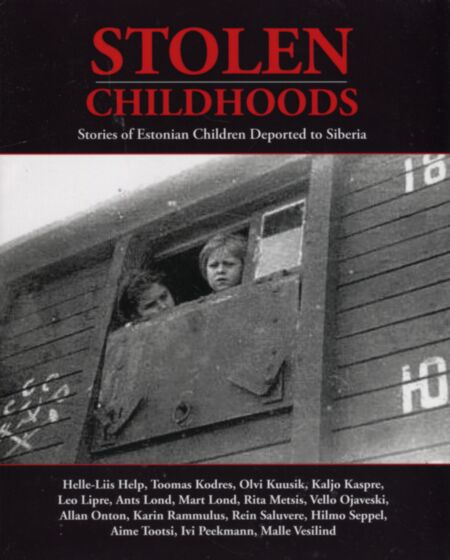
Stolen childhoods
Lakeshore Press 2014
In March of 1949, after the Second World War, the Soviets deported over 20,000 Estonians in cattle cars to Sbieria. «Crimes» of the fathers often included being successful farmers, businessmen, or educators. Family members were also deported into what the official documents called «perpetual exile».
Among these deportees were girls and boys, who even today remember well the deportation itself and their lives in the Siberian collective farms and work camps.
A few years ago a group of now retired men and women, all of whom had been sent to the Krasnoyarsk region of Siberia, decided to write their stories so that the world might remember what happened during that Stalinist time. This book presents their first-person accounts of exile in Siberia, as well as their stories of returning to Estonia to rebuild their personal and professional lives.
In March of 1949, after the Second World War, the Soviets deported over 20,000 Estonians in cattle cars to Sbieria. «Crimes» of the fathers often included being successful farmers, businessmen, or educators. Family members were also deported into what the official documents called «perpetual exile».
Among these deportees were girls and boys, who even today remember well the deportation itself and their lives in the Siberian collective farms and work camps.
A few years ago a group of now retired men and women, all of whom had been sent to the Krasnoyarsk region of Siberia, decided to write their stories so that the world might remember what happened during that Stalinist time. This book presents their first-person accounts of exile in Siberia, as well as their stories of returning to Estonia to rebuild their personal and professional lives.
| Tootekood | R0266051 |
|---|---|
| Aasta | 2014 |
| Kirjastus | Lakeshore Press |
| Tõlkija | Kristiina Paul |
| Köide | pehme |
| Lehekülgi | 136 |
| EAN | 9780965053907 |
| Ümbris | ei |
| Keel | inglise |
| Teema | Eesti ajalugu, maailm |
Kas kõik raamatud on kohe saadaval?
Uued raamatud - suur osa on laos olemas (seisukord>uus), aga suur osa on ka tellimisel (seisukord > uus tellimisel). Tellimisel raamatud saabuvad lattu enamasti 1-2-3 päeva jooksul.
Kasutatud raamatud (seisukord > väga hea, hea, rahuldav) on kõik kohe laos või poes olemas.
Mis siis teha, kui minu otsitud raamat on läbi müüdud?
Leia otsitav raamat täppisotsinguga siit.
Saada oma soov info@raamatukoi.ee. Me salvestame selle ja anname teada, kui raamatu
leiame. Vahel leiame kiiresti, vahel kulub aastaid. On raamatuid, mille järjekorras on mitu inimest.
Kuidas raamatud kätte saab?
Saadame raamatuid kõigisse pakikappidesse ja kulleriga otse tellija aadressile. Raamatuile saab ka ise kauplustesse järele tulla: Harju tn 1 Tallinnas või Lossi tn 28 Viljandis. Soome, Lätti ja Leetu saadame raamatuid nii pakikappidesse kui tavapostiga, mujale maailmas samuti tavapostiga. Loe lähemalt siit.
Millises seisukorras on kasutatud raamatud?
Iga kasutatud raamatu eksemplari juures on märgitud seisukord: väga hea, hea, rahuldav, halb ja vajadust mööda ka täpsustus. Loe lähemalt siit.