

L’ oblique dans le monde grec
Concept et imagerie
Thibault Girard · Archaeopress · 2015
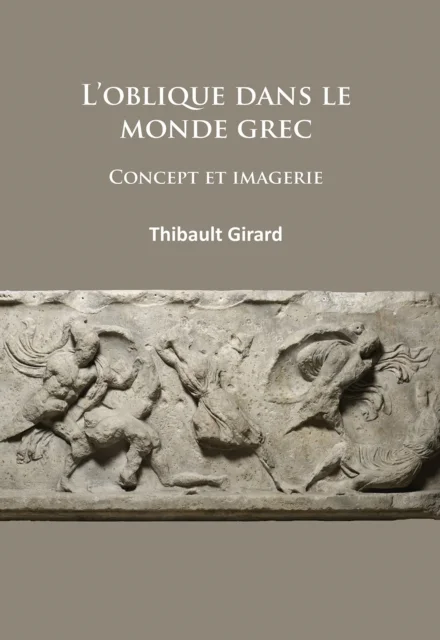
What could be more evident than the concepts of oblique, horizontal or vertical? In the modern world, these concepts form the basis of our thought system, both from a mathematical and artistic point of view. Everything would suggest that these principles were known to the Greek civilization. However, the study of the surviving texts casts a different light on the matter. Homer did not know the concept of oblique - no word could translate it into the language of his time. Even later, the Greeks had five adjectives approximately meaning oblique: λοξός, πλάγιος, λέχριος, σκολιός and δόχμιος. Each discipline (cosmology, optic, geography, art, etc.) had its own way of looking at these five words. Paradoxically, what the written language had not yet synthesized was abundant in imagery. Even more surprising, the oblique in images, which we consider as a sign of movement in our own iconographic language, is found to signify both movement and rest. Two monuments of Greek art draw attention to this new paradox: the frieze of the Mausoleum of Halicarnassus and the Mourning Athena. In each of them, the oblique line is present, and carries two distinct meanings. These two forms of language, written and figurative, bring a different and complementary perspective on the ancient Greeks' apprehension (or lack thereof) of the concept of oblique.
Uus kasutamata raamat
Detailid
- Alapealkiri
- Concept et imagerie
- Autor
- Thibault Girard
- ISBN
- 9781784911393
- Aasta
- 2015
- Kirjastus
- Archaeopress
- Keel
- prantsuse
- Köide
- Pehme kaas
- Lehekülgi
- 196
- Teema
- Humanitaaria: ajalugu, filosoofia, religioon › Arheoloogia — Archaeology
- Kaal
- 640 g