

Project Financing and the International Financial Markets
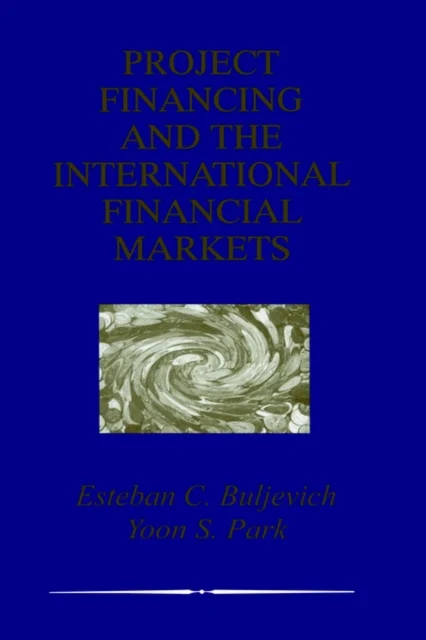
Esteban C. Buljevich, Yoon S. Park · Kluwer Academic Publishers · 1999
Since the 1970s, the practice of financing major private and public sector capital-intensive projects has shifted to an ever-greater reliance on private funding sources, as opposed to direct financing through the
issuance of corporate or government bonds. In the 1990s, these financing practices have undergone further changes with the increasing globalization of capital markets, the growth of derivative instruments, and the rapid
increase in information technology that enhances cash-management practices. Today's project financing market is increasingly using sophisticated capital market, bank and agency financing mechanisms as well as using
derivative instruments for asset and liability management. Thus, financial market innovations are bringing the once separate fields of project financing and international finance more closely together. This is the first
book to treat both topics as an interrelated whole, for contemporary project financing cannot be fully understood without a good working knowledge of the international financial markets that have developed the various
financing techniques and funding sources being used. The book provides an in-depth description of cross-border project financing as a technique for financing capital-intensive projects, as well as an overview of certain
financing and derivative instruments currently available in the global financial markets.
The first part of the book provides an overview of certain funding and derivative instruments currently used in the
international financial markets, including a general overview of financial innovations that have occurred in recent decades. Topics covered include an introduction to the syndicated Euro-credit market; an overview of
various marketable debt securities actively used in the international financial markets; an introduction to depositary receipt as an innovative way of raising cross-border equity capital; an elaboration of the derivative
instruments most commonly used in the project financing arena, including interest rate, currency and commodity swaps; and finally an overview of banks' off-balance sheet activities as a critical driving force for the
participation of banks in the international financial and derivative markets.
The second part of the book provides an in-depth analysis of project financing that concentrates on the financier's perspective.
Topics covered include a general overview of the project financing industry; a step-by-step description of a typical cross-border project finance transaction; a description of the main characteristics and advantages of
project financing as opposed to more traditional corporate lending practices; an overview of appraisal techniques for assessing project financing; a comprehensive analysis of the different risk management techniques used in
project financing for reducing, distributing and hedging risks; and a brief overview of certain limited-resource financing schemes. The book includes a special focus on the various stages of the risk management process for
project financing, elaborating on the different stages of risk identification, risk assessment, risk reduction, risk distribution and hedging and insurance. The authors also provide a comprehensive glossary of terms
relating to international finance and project financing. This book will fulfill the need for an essential text on project financing as well as a professional reference guide.
Uus kasutamata raamat
Detailid
- Autorid
- Esteban C. Buljevich, Yoon S. Park
- ISBN
- 9780792385240
- Aasta
- 1999
- Kirjastus
- Kluwer Academic Publishers
- Keel
- inglise
- Köide
- Kõva kaas
- Lehekülgi
- 302
- Teema
- Majandus, rahandus ja juhtimine › Äri ja juhtimine — Business & management
- Kaal
- 658 g