

Reimagining Dinosaurs in Late Victorian and Edwardian Literature
How the ‘Terrible Lizard' Became a Transatlantic Cultural Icon
Richard Fallon · Cambridge University Press · 2021
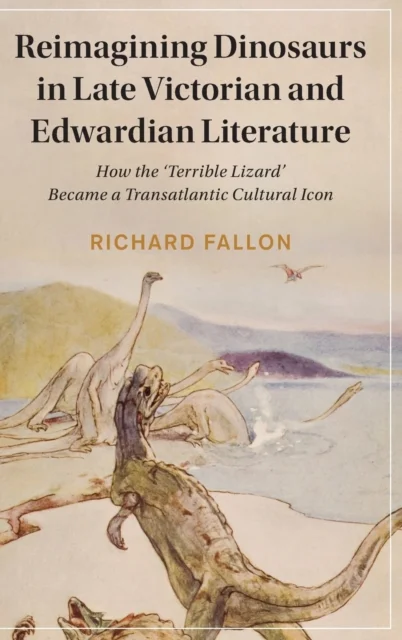
How the ‘Terrible Lizard' Became a Transatlantic Cultural Icon
Richard Fallon · Cambridge University Press · 2021
When the term 'dinosaur' was coined in 1842, it referred to fragmentary British fossils. In subsequent decades, American discoveries—including Brontosaurus and Triceratops—proved that these so-called 'terrible lizards' were in fact hardly lizards at all. By the 1910s 'dinosaur' was a household word. Reimagining Dinosaurs in Late Victorian and Edwardian Literature approaches the hitherto unexplored fiction and popular journalism that made this scientific term a meaningful one to huge transatlantic readerships. Unlike previous scholars, who have focused on displays in American museums, Richard Fallon argues that literature was critical in turning these extinct creatures into cultural icons. Popular authors skilfully related dinosaurs to wider concerns about empire, progress, and faith; some of the most prominent, like Arthur Conan Doyle and Henry Neville Hutchinson, also disparaged elite scientists, undermining distinctions between scientific and imaginative writing. The rise of the dinosaurs thus accompanied fascinating transatlantic controversies about scientific authority.
Uus kasutamata raamat
Detailid
- Alapealkiri
- How the ‘Terrible Lizard' Became a Transatlantic Cultural Icon
- Autor
- Richard Fallon
- ISBN
- 9781108834001
- Aasta
- 2021
- Kirjastus
- Cambridge University Press
- Keel
- inglise
- Köide
- Kõva kaas
- Lehekülgi
- 304
- Teema
- Kirjandus ja kirjandusteadus › Kirjanduslugu ja -kriitika — Literature: history & criticism
- Kaal
- 586 g