

The New Role of the Academies of Sciences in the Balkan Countries
C. Proukakis, Nikolaos Katsaros (toim.) · Kluwer Academic Publishers · 1997
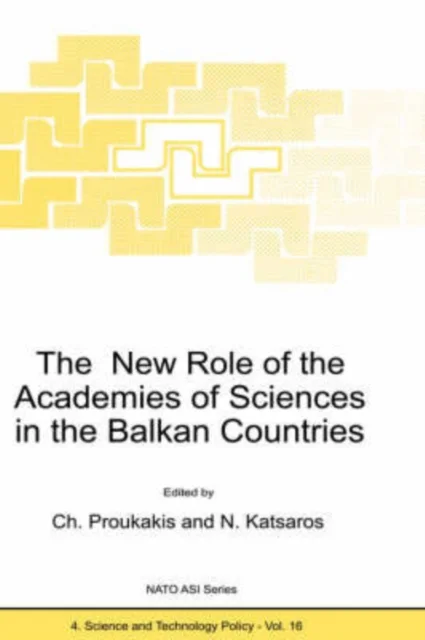
C. Proukakis, Nikolaos Katsaros (toim.) · Kluwer Academic Publishers · 1997
It is well known that the Academies of Sciences in Western Europe have different goals than those of Eastern Europe mainly due to their independent status. Although some of the Academies in the West supervise research
activities or some institutes, their main mission is to stimulate and access scientific developments in their own countries. In particular, they have a mission to advise their governments and other central bodies on science
policy and organization of research. The Academies of Central and Eastern Europe supervise numerous research institutes with a relatively large number of research scientists. Also, many of these institutes carry out basic and
applied research isolated from that of universities and industry. Industry on a few occasions in the past sought solutions to its problems or the development of new products from the Institutes of the Academies of Sciences.
The challenges now facing the Academies of Central and Eastern Europe include the lack of adequate financing, the loss of status of scientific work, the defection of young researchers and the difficulties of recruiting new
high level research staff. A major problem is the emerging lack of candidates for doctorate studies. The organization and financing of research in institutes, universities and industries and the role that the Academies of
Sciences can play is also one of the subjects to be addressed. Public funding is limited and most of the funds available are directed towards applied research.
Uus kasutamata raamat
Detailid
- Autorid
- C. Proukakis, Nikolaos Katsaros (toim.)
- ISBN
- 9780792347736
- Aasta
- 1997
- Kirjastus
- Kluwer Academic Publishers
- Keel
- inglise
- Köide
- Kõva kaas
- Lehekülgi
- 238
- Teema
- Ühiskond ja sotsiaalteadused › Sotsioloogia ja antropoloogia — Sociology & anthropology
- Kaal
- 560 g