

Three Mosquitoes
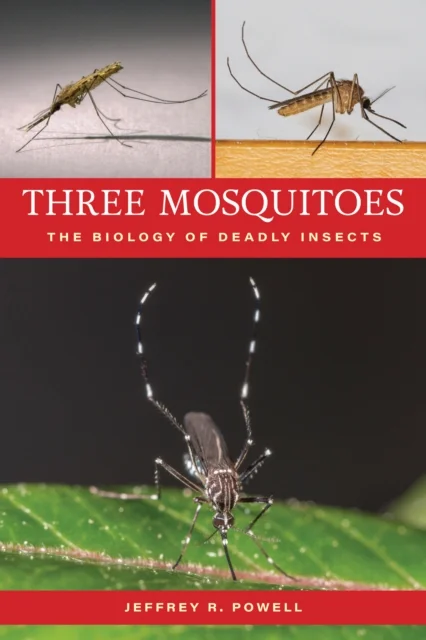
The Biology of Deadly Insects
Jeffrey R. Powell · Johns Hopkins University Press · 2025
An engaging introduction to mosquitoes unravels the complex biology, evolution, and natural history of these tiny yet formidable creatures.
There are more than 3,700 species of mosquitoes in the world, yet most research has focused on three that have had the greatest health impacts on humans: Aedes aegypti, Anopheles gambiae, and Culex pipiens. In Three Mosquitoes, renowned Yale biologist Jeffrey R. Powell provides a comprehensive yet accessible guide to these critical species.
Powell discusses the three mosquitoes' complex biology, distributions, taxonomy, and evolutionary histories, along with their ecological and social implications. However, rather than describe each species in isolation, the book is arranged by themes and levels of biological organization (molecular, whole organism, and population). This structure reveals insightful comparisons and highlights important contrasts that might be overlooked if each species were described separately. Within this context, Powell examines mosquito-microbe associations—focusing mainly on the microbes that cause human disease—and past, present, and future efforts to control mosquito populations to reduce disease transmission.
Whether you are a student, instructor, an entomologist, or a curious reader, this book offers a fascinating exploration of the genetic, ecological, and behavioral intricacies of mosquitoes that highlights their crucial roles in human history and health.
Uus kasutamata raamat
Detailid
- Alapealkiri
- The Biology of Deadly Insects
- Autor
- Jeffrey R. Powell
- ISBN
- 9781421451695
- Aasta
- 2025
- Kirjastus
- Johns Hopkins University Press
- Keel
- inglise
- Köide
- Pehme kaas
- Lehekülgi
- 264
- Teema
- Matemaatika ja loodusteadused › Bioloogia ja eluteadused — Biology, life sciences
- Märksõnad
- putukad — Insects (entomology)
- Kaal
- 444 g