

The Baltic States
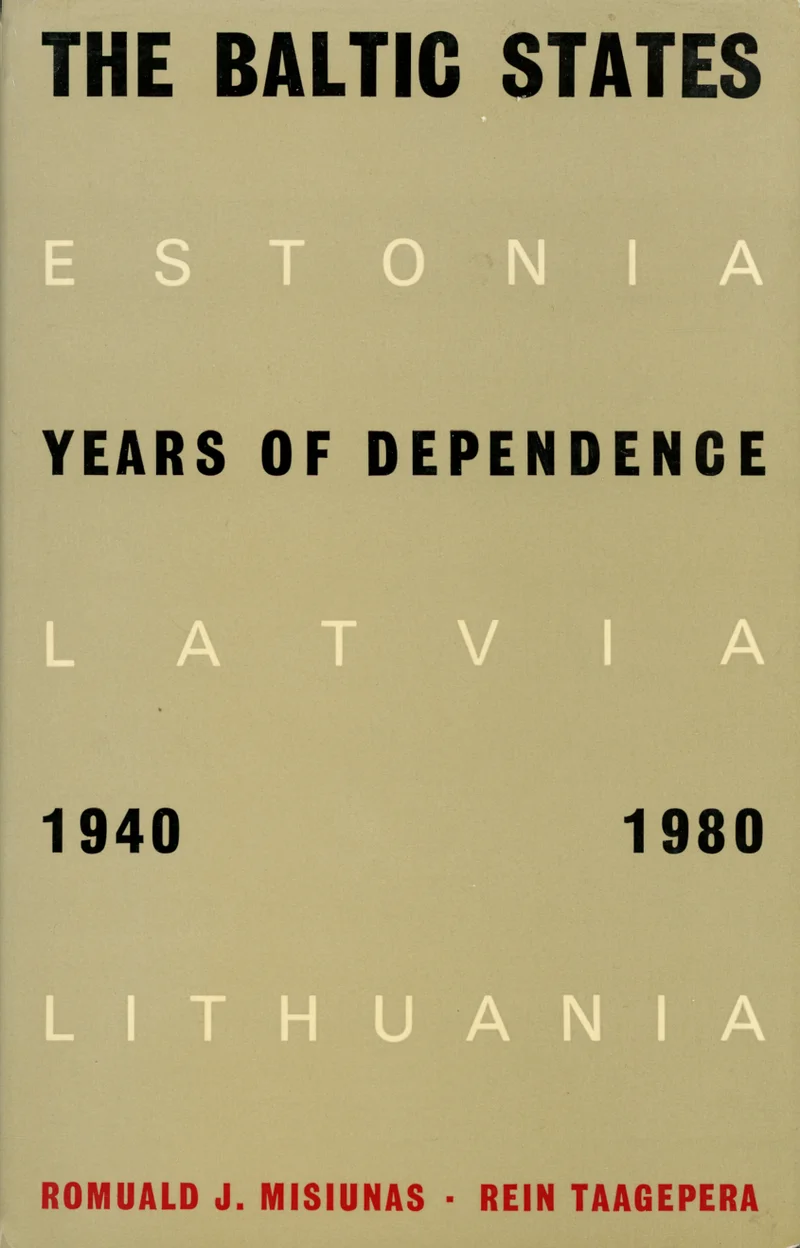
Years of dependence, 1940-1980
Romuald J. Misiunas, Rein Taagepera · Hurst & Company · 1983
Ajalooline ülevaade Balti riikidest ning nende nende okupeerimisest Nõukogude Liidu poolt.
In 1940, as a result of its non-aggression pact with Nazi Germay, the Soviet Union occupied and annexed the three Baltic states: Estonia, Latvia and Lithuania. They had been a part of the Russian Empire since the eighteenth century, achieving political independence in 1918. Come observers thought political annexation in 1940 would result in the eventual assimilation of each state's social and cultural identity. While such predictions are still being voiced in the 1980s, the three national cultures have demonstrated a remarkable resilience in the face of Soviet domination.
This book describes and analyzes the contradiction of political dependence and cultural autonomy in the Baltic nations since their annexation.
Contents:
In 1940, as a result of its non-aggression pact with Nazi Germay, the Soviet Union occupied and annexed the three Baltic states: Estonia, Latvia and Lithuania. They had been a part of the Russian Empire since the eighteenth century, achieving political independence in 1918. Come observers thought political annexation in 1940 would result in the eventual assimilation of each state's social and cultural identity. While such predictions are still being voiced in the 1980s, the three national cultures have demonstrated a remarkable resilience in the face of Soviet domination.
This book describes and analyzes the contradiction of political dependence and cultural autonomy in the Baltic nations since their annexation.
Contents:
- Introduction: Historical background
- The war years: 1940-1945
- Postwar Stalinism: 1945-1953
- The re-emergence of national cultures: 1954-1968
- Centralization and westernization: 1968-1980
- The outlook for the 1980s
- Appendix A. Major Baltic government leaders and administrators, 1938-1980
- Appendix B. Tables
Pakiautomaati 1–2 p Tule ise järele*Hinnad kehtivad veebipoest ostmisel; kauplustes võivad hinnad erineda
Läbi müüdud — jäta soov ja anname teada, kui raamat on jälle saadaval. Tarne ja kättesaamine
Detailid
- Alapealkiri
- Years of dependence, 1940-1980
- Autorid
- Romuald J. Misiunas, Rein Taagepera
- Aasta
- 1983
- Kirjastus
- Hurst & Company
- Keel
- inglise
- Köide
- Kõva kaas
- Lehekülgi
- 333
- Mõõdud
- 220 × 140 mm
- Kaal
- 620 g
- Tiraaž
- 0
- Ümbris
- Jah
- Artikkel
- R0221988
- Märksõnad
- 1940-ndad, ajalugu, baltimaad, baltimaade ajalugu, baltimaade okupeerimine, lähiajalugu, Nõukogude okupatsioon, nõukogude okupatsioon, nõukogude võim