

Thinking Theoretically About Soviet Nationalities
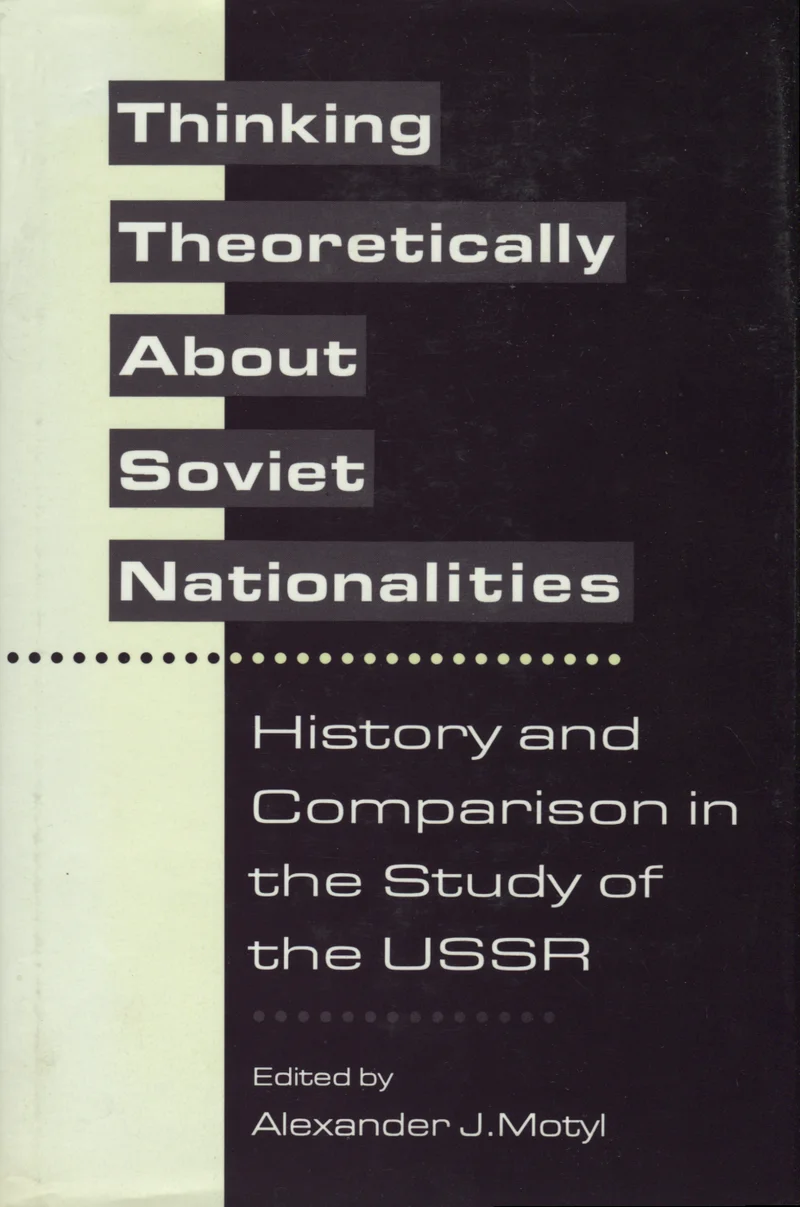
History and Comparison in the Study of the USSR
Columbia University Press · 1992
This book is an innovative and productive effort to bridge the chasm that has too long separated empirical studies of the Soviet nationality issues from theoretical work in comparative politics. As such, it also charts promising channels for future research in both fields. The several authors of the book's chapters have outstanding reputations as theorists but have not hitherto specialized in Soviet studies. Here they demonstrate that conceptual rigor, comparative perspective, and explanatory vision can indeed revive and illuminate academic Sovietology at a fluid and critical juncture.
Joseph Rothschild, Research Institute of International Change, Columbia University
Contents:
Joseph Rothschild, Research Institute of International Change, Columbia University
Contents:
- Introduction. What this book is not, and what it is
- How to begin thinking comparatively about Soviet ethnic problems. Donald Horowitz
- The autonomy of ethnic identity: Historic cleavages and nationality relations in the USSR. John Armstrong
- Ethnic identity and territorial nationalism in comparative perspective. Anthony Smith
- The national and colonial question and marxism: A view from the South. M. Crawford Young
- Language and national identity in the Soviet Union and India. Paul Brass
- Language and the state: Russia and the Soviet Union in comparative perspective. David Laitin, Roger Petersen, John Slocum
- The emergence of nationalist politics in the USSR: A comparision of Estonia and the Ukraine. Charles Furtado, Michael Hechter
- Center-periphery relations in the Soviet empire: Some interpretive observations. S. Eisenstadt
- Ethnic conflict in the Soviet Union: The revenge of particularism. Kenneth Minogue, Beryl Williams
- Nationalism in the vacuum. Ernest Gellner
- Building bridges and changing landmarks: Theory and concept in the study of Soviet nationalities
Pakiautomaati 1–2 p Tule ise järele*Hinnad kehtivad veebipoest ostmisel; kauplustes võivad hinnad erineda
Läbi müüdud — jäta soov ja anname teada, kui raamat on jälle saadaval. Tarne ja kättesaamine
Detailid
- Alapealkiri
- History and Comparison in the Study of the USSR
- ISBN
- 023107512X
- Aasta
- 1992
- Kirjastus
- Columbia University Press
- Keel
- inglise
- Köide
- Kõva kaas
- Lehekülgi
- 284
- Toimetaja
- Alexander J. Motyl
- Mõõdud
- 235 × 160 mm
- Kaal
- 610 g
- Ümbris
- Jah
- Artikkel
- R0171791
- Märksõnad
- nõukogude liit, rahvuspoliitika, vähemusrahvused